The Future of Sustainable Packaging: Trends in the Bulk Container Industry
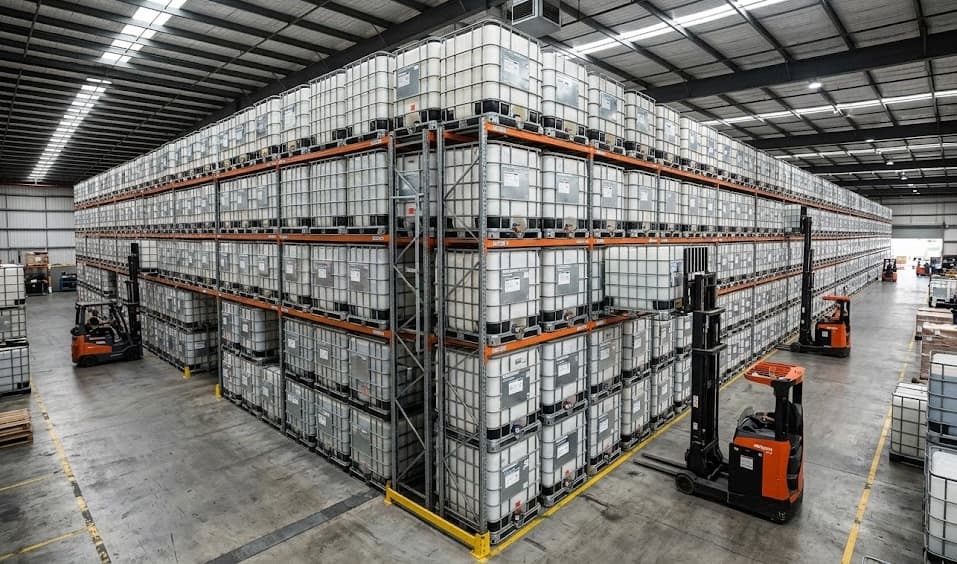
The bulk container industry, including IBC totes, drums, and other intermediate packaging, is undergoing a transformation driven by sustainability imperatives, technological innovation, and evolving customer expectations. Understanding where the industry is headed helps businesses make forward-looking decisions about their packaging strategies. This article explores the most significant trends shaping the future of sustainable bulk packaging.
Trend 1: Bio-Based and Recycled Content Materials
The most fundamental change in bulk container manufacturing is a shift in raw materials. Traditionally, IBC tote bottles have been manufactured from virgin HDPE derived from petroleum feedstock. The industry is moving toward two alternatives.
Recycled-content HDPE is increasingly available in grades suitable for IBC tote manufacturing. Advances in sorting, cleaning, and reprocessing technology have improved the quality of post-consumer recycled (PCR) and post-industrial recycled (PIR) HDPE to the point where it can meet the mechanical and chemical resistance requirements for IBC bottles.
Some manufacturers are already offering IBC totes with 25 to 50 percent recycled content, and targets of 75 percent or higher are on the roadmap. The primary challenges are ensuring consistent quality across recycled feedstock batches and meeting the specific certification requirements for food-grade and hazmat applications.
Bio-based polyethylene, produced from sugarcane ethanol rather than petroleum, offers a functionally identical material with a lower carbon footprint. Bio-PE has the same chemical structure as conventional HDPE and can be processed on the same equipment, making it a drop-in replacement. Braskem, the largest bio-PE producer, supplies material used in a growing number of packaging applications.
The cost premium for recycled and bio-based materials is currently 10 to 30 percent above virgin HDPE, but this gap is narrowing as production scale increases and petroleum prices fluctuate. Regulatory mandates for recycled content, such as California's SB 54, are accelerating adoption.
Trend 2: Smart Containers and IoT Integration
The integration of sensors and connectivity into IBC totes is transforming them from passive containers into active data sources. Smart IBC totes can provide real-time information on location (via GPS or cellular tracking), fill level (using ultrasonic or pressure sensors), temperature of contents, tilt and shock events during transport, and lid/valve status (open or closed).
This data enables predictive logistics (knowing when containers will be empty and need pickup), quality assurance (verifying temperature maintenance throughout the cold chain), loss prevention (tracking container location and detecting unauthorized access), and fleet optimization (understanding utilization rates and routing containers more efficiently).
The cost of IoT sensors has dropped dramatically, making smart container technology increasingly accessible. Basic tracking devices now cost less than 20 dollars per unit, and the ongoing connectivity costs (cellular data for periodic location reports) can be under 5 dollars per month.
The challenge lies in standardization. Currently, each IoT solution provider uses proprietary hardware and software. Industry-wide standards for container sensor data would enable seamless tracking across the supply chain, regardless of which company's sensors are installed.
Trend 3: Blockchain and Digital Product Passports
Building on IoT data, the concept of a digital product passport for IBC totes is gaining traction. A digital passport would record the complete lifecycle of each individual container: manufacturing details (materials, factory, date, certifications), every fill cycle (what was stored, when, by whom), cleaning and reconditioning records, inspection results and condition assessments, and chain of custody through every transfer.
Blockchain technology provides a tamper-proof, decentralized record-keeping system ideal for this application. Each event in the container's life would be recorded as a transaction on the blockchain, creating an immutable history that any authorized party can verify.
The benefits are substantial. Food safety traceability would improve dramatically, enabling rapid identification of potentially contaminated containers in the event of a recall. Regulatory compliance documentation would be automatic and always current. Secondary market transactions would be supported by verified condition and history data, reducing the risk for buyers. And sustainability claims would be backed by verifiable lifecycle data.
The European Union is leading regulatory development in this area, with digital product passport requirements expected to extend to industrial packaging within the next decade. Forward-thinking companies are beginning to implement these systems voluntarily.
Trend 4: Advanced Reconditioning Technologies
The reconditioning industry is investing in technology that improves the quality, consistency, and sustainability of the reconditioning process itself.
Automated inspection systems using machine vision can evaluate bottle condition more consistently than human inspectors, measuring wall thickness with laser systems, detecting micro-cracks invisible to the naked eye, and assessing UV degradation through spectral analysis of the HDPE surface.
Advanced cleaning technologies, including CO2 cleaning (using pressurized carbon dioxide to remove residues without water), ozone-based sanitization, and ultrasonic cleaning, reduce water consumption and chemical use while improving cleaning effectiveness.
Robotics and automation in the reconditioning line increase throughput and consistency while reducing labor costs. Some facilities have achieved fully automated reconditioning from incoming used tote to outgoing reconditioned product.
These investments are improving the quality perception of reconditioned containers, making them acceptable for an expanding range of applications that previously required new containers.
Trend 5: Design for Sustainability
New IBC tote designs are being developed with sustainability as a primary design criterion from the outset, rather than as an afterthought.
Lightweight designs reduce material consumption and transport emissions. Advances in HDPE formulations and bottle design have enabled 10 to 15 percent weight reductions without sacrificing performance.
Improved disassembly design makes reconditioning faster and more efficient. Quick-release connections between the bottle and cage, snap-fit rather than bolted pallet attachments, and standardized component interfaces reduce reconditioning labor and material waste.
Extended-life materials, including UV-stabilized HDPE formulations and enhanced galvanizing or coating systems for steel cages, increase the useful life of each component, reducing the frequency of replacement and reconditioning.
Modular designs allow damaged sections to be replaced without scrapping the entire component. For example, a cage design where individual bars can be unbolted and replaced independently, rather than requiring the entire cage to be scrapped when a single bar fails.
Trend 6: Circular Economy Business Models
The business models around IBC totes are evolving to support circular economy objectives.
Container-as-a-service models, where customers pay per use rather than purchasing containers, shift the ownership and lifecycle management responsibility to the service provider. This incentivizes the provider to maximize container lifespan and utilization, aligning economic interests with sustainability outcomes.
Deposit-return systems, where a deposit paid at the time of container purchase is refunded when the container is returned for reconditioning, ensure high return rates and reliable supply for reconditioning facilities.
Collaborative pooling arrangements, where multiple companies share a common pool of IBC totes managed by a third party, optimize utilization rates and reduce the total number of containers needed to serve a given volume of product flow.
Trend 7: Regulatory Evolution
Regulatory frameworks are evolving to reflect sustainability priorities. Extended Producer Responsibility (EPR) legislation, which makes manufacturers responsible for the end-of-life management of their packaging, is expanding in scope and geography.
Carbon labeling requirements may eventually require disclosure of the carbon footprint associated with packaging, creating market preference for lower-carbon options like reconditioned containers.
Chemical regulations are becoming more restrictive regarding substances that can be used in packaging materials, which is driving research into safer additives, coatings, and processing aids.
What This Means for Your Business
These trends point toward a future where sustainability performance becomes a key differentiator in bulk packaging decisions. Companies that invest now in sustainable container practices -- embracing reconditioning, implementing tracking systems, and working with forward-thinking suppliers -- will be well-positioned as these trends mature.
The practical steps you can take today include establishing or expanding your container reconditioning program, evaluating IoT tracking solutions for your container fleet, working with suppliers who offer recycled-content or bio-based container options, and documenting your container lifecycle practices in preparation for future reporting requirements.
The future of bulk container packaging is more sustainable, more connected, and more circular than its past. The companies that embrace these trends will find both environmental and economic benefits.
Need IBC Totes for Your Operation?
IBC West Coast offers new, used, and reconditioned IBC totes with West Coast delivery. Get a free quote today.
Get a Free Quote