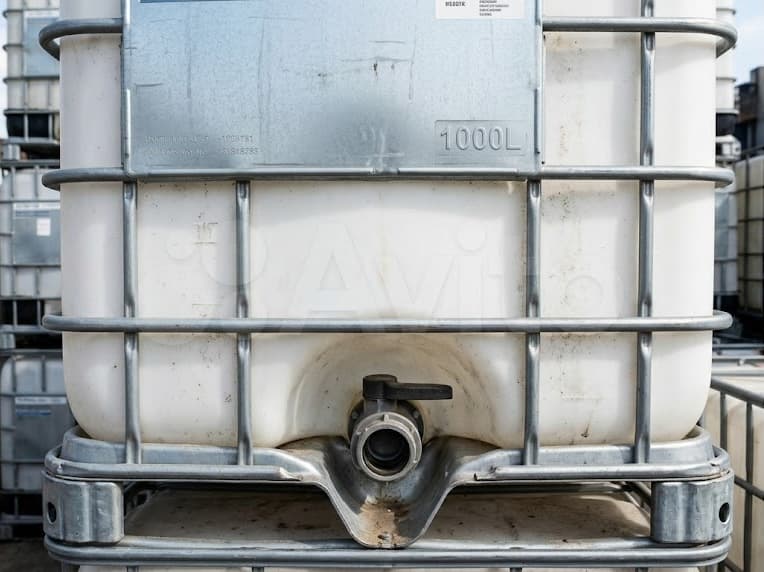
Our Story
From a single truck collecting surplus totes to the West Coast's most trusted IBC partner — here is how we got here.
How It Started
A Problem Worth Solving
The IBC tote industry has a waste problem. Every year, millions of intermediate bulk containers reach the end of their first use cycle and are thrown away. These containers, built from high-density polyethylene and galvanized steel, are engineered to last for decades, yet most are discarded after a single fill. The environmental cost is staggering: each tote that goes to a landfill represents roughly 130 pounds of plastic and 85 pounds of embedded carbon emissions.
IBC West Coast was born from the conviction that this waste is entirely preventable. Our founder spent years working in industrial logistics and saw firsthand how businesses on one side of town were paying to dispose of perfectly good totes while businesses on the other side were paying full retail for identical containers off the factory line.
The disconnect was obvious, and so was the opportunity. Rather than letting functional containers flow from factory to landfill in a single straight line, what if someone collected them, verified their integrity, cleaned them up, and put them back into circulation? The economics made sense. The environmental case was undeniable. And the logistics, while complex, were entirely solvable with the right systems and the right team.
The solution was straightforward: collect used totes, inspect and clean them, and put them back into service at a fraction of the cost of new. What started as a side operation run out of a rented garage has grown into a full-service facility that processes thousands of totes annually and serves clients across five western states.
2015 - The First Year
Starting From Scratch
The first year of IBC West Coast was defined by hustle, resourcefulness, and learning on the job. Our founder started with a used flatbed truck, a pressure washer, and a rented 2,000-square-foot garage in Hayward, California. There was no dedicated staff, no website, and no formal business relationships. Everything was built from the ground up.
The first challenge was sourcing. In the beginning, finding businesses willing to sell their used totes required cold calling, driving from warehouse to warehouse, and explaining the concept of IBC resale to facility managers who had never considered it. Most surplus totes were being hauled away by waste management companies at the owner's expense. The idea that someone would pay for them was genuinely novel.
Within three months, word began to spread. A chemical manufacturer in Oakland became our first regular supplier, offloading 20 to 30 totes per month. A few farms in the Central Valley became our first regular buyers after discovering that reconditioned totes worked perfectly for water storage and fertilizer transport at half the price of new. By the end of that first year, we had collected and resold over 500 totes, proving the business model was viable.
That first year also taught us the critical importance of quality grading. Early on, we sold a batch of totes without a formal inspection process, and several had hairline cracks in the bottle that were not visible without careful examination. The resulting client complaint was a turning point: we developed our first written inspection protocol that same week, and quality assurance has been the cornerstone of our operation ever since.
Key Milestones
Our Journey
The Beginning
IBC West Coast was founded with a single truck and a small warehouse in Hayward, CA. Our founder recognized that thousands of usable IBC totes were being discarded by manufacturers across the region while other businesses were paying full price for new ones. We started by collecting surplus totes from local factories and reselling them to nearby farms and chemical distributors.
- ●First month: 47 totes collected from three local manufacturers
- ●Initial investment: one used flatbed truck and a 2,000 sq ft rented garage
- ●First clients: two family-owned farms in the Central Valley
- ●Revenue in year one: enough to cover operating costs and reinvest in a second vehicle
First Dedicated Facility
Growing demand pushed us to lease our first dedicated processing facility. We installed a triple-rinse washing system, introduced a standardized grading protocol (A, B, and C tiers), and hired our first full-time cleaning crew. That year, we processed over 2,000 totes for the first time.
- ●Moved into a 6,000 sq ft warehouse with dedicated wash bay and staging areas
- ●Developed the three-tier grading system still used today
- ●Hired four full-time warehouse staff, bringing total team to seven
- ●Established first recurring pickup routes covering the San Francisco Bay Area
West Coast Expansion
We expanded operations to serve California, Oregon, Washington, Nevada, and Arizona. Our fleet grew from two trucks to eight, and we established pickup routes that run weekly across all five states. We also launched our online quote system, allowing clients to request pricing in minutes.
- ●Added Portland, Seattle, Las Vegas, and Phoenix to our regular delivery network
- ●Fleet expanded to eight vehicles including two 26-foot box trucks
- ●Online quote system processed 1,200 requests in its first year
- ●Active client accounts grew from 40 to over 120
Zero-Landfill Commitment
We adopted a formal zero-landfill policy, committing to recycling or repurposing 100% of the materials we handle. HDPE bottles, steel cages, wooden pallets, and valves are all processed separately and sent to specialized recyclers. Our material recovery rate hit 98% that year.
- ●Partnered with three certified HDPE recyclers and two steel scrap facilities
- ●Implemented material tracking system to document every component's destination
- ●Achieved 98.2% material recovery rate, verified by third-party audit
- ●Began providing environmental impact reports to clients with every order
Food-Grade Certification
We invested in upgraded cleaning equipment and process documentation to achieve food-grade reconditioning capabilities. This opened up new markets in food and beverage, agriculture, and pharmaceutical distribution, where container hygiene standards are especially rigorous.
- ●Installed FDA/USDA-compliant cleaning line with temperature-controlled wash cycles
- ●Created comprehensive standard operating procedures for food-grade reconditioning
- ●Passed initial food-grade audit with zero non-conformances
- ●Onboarded 35 new food and beverage clients within the first six months
12,000 Totes Annually
We crossed the milestone of processing 12,000 totes in a single year. Our client base grew to over 200 active accounts across the West Coast. We expanded our parts and accessories division and began offering custom modification services for specialized applications.
- ●Processing volume increased 40% over the previous year
- ●Launched parts catalog with 50+ valve, gasket, cap, and fitting SKUs
- ●Custom modification services included outlet conversions, heating jackets, and mixer mounts
- ●Client satisfaction survey returned a 96% positive rating
Looking Ahead
We are investing in automation, exploring partnerships with container manufacturers for take-back programs, and developing a digital tracking platform that will give clients full visibility into the lifecycle of every tote they purchase. The goal: make IBC reuse the industry default.
- ●Digital tracking platform in beta testing with 15 pilot clients
- ●Automation investments targeting 30% increase in processing throughput
- ●In discussions with two major IBC manufacturers on closed-loop programs
- ●Target: 20,000 totes processed in 2026
Growth Over Time
Year-Over-Year Growth Metrics
From 500 totes in our first year to over 12,000 annually, our growth reflects the increasing demand for sustainable, cost-effective IBC solutions.
| Year | Totes Processed | Active Clients | Fleet Size | Staff |
|---|---|---|---|---|
| 2015 | 500 | 12 | 1 | 2 |
| 2016 | 1,200 | 28 | 2 | 3 |
| 2017 | 2,400 | 45 | 3 | 7 |
| 2018 | 3,800 | 72 | 5 | 9 |
| 2019 | 5,500 | 120 | 8 | 11 |
| 2020 | 6,200 | 135 | 8 | 12 |
| 2021 | 7,800 | 155 | 8 | 13 |
| 2022 | 9,500 | 175 | 8 | 14 |
| 2023 | 10,800 | 190 | 8 | 15 |
| 2024 | 12,000+ | 200+ | 8 | 15+ |
Adversity
Challenges We Overcame
Building a circular economy business from scratch was not without obstacles. Here are the major challenges we faced and how we turned each one into a strength.
Market Education
In 2015, most businesses had never considered buying a used IBC tote. The concept of reconditioned containers was unfamiliar, and many facility managers assumed that 'used' meant 'unreliable.' We spent the first two years educating the market through in-person demonstrations, free sample deliveries, and detailed documentation of our inspection and cleaning processes. Today, the demand for reconditioned totes far outstrips our supply, but building that initial trust required patience and persistence.
Quality Consistency at Scale
As our volume grew from hundreds to thousands of totes per year, maintaining consistent quality became our biggest operational challenge. Every tote that arrives at our facility is different: different manufacturer, different age, different previous contents, different condition. We addressed this by developing a rigorous standardized grading protocol, investing in trained inspectors, and implementing a digital tracking system that logs every tote's condition at each stage of processing. This system gives us the consistency of a production line while handling the variability of used goods.
The 2020 Supply Chain Disruption
The pandemic created a paradox for our business. On one hand, demand for containers surged as companies scrambled for packaging and storage solutions. On the other, supply tightened as many manufacturers paused operations and fewer totes entered the secondary market. We navigated this by deepening our supplier relationships, expanding our sourcing radius, and temporarily increasing our buyback prices to incentivize sellers. The experience reinforced the importance of maintaining a diverse supplier network.
Regulatory Compliance
Operating a facility that handles containers with residual industrial chemicals requires strict compliance with EPA, DTSC, and local environmental regulations. Navigating this regulatory landscape as a small business was daunting. We invested in environmental consulting, implemented wastewater treatment systems, and developed detailed standard operating procedures for handling different types of container residues. Today, our compliance infrastructure is one of our strongest competitive advantages.
Logistics Optimization
Serving five states with a fleet of eight vehicles requires precise route planning. In the early days, we ran pickups and deliveries on an ad-hoc basis, which led to empty miles, wasted fuel, and inconsistent service. We solved this by building consolidated route corridors — fixed weekly routes that bundle multiple pickups and deliveries along geographic corridors. This reduced our cost per tote moved by over 35 percent and made our delivery windows more reliable.
Defining Moments
Key Decisions That Shaped Our Company
Every business is defined by a handful of pivotal decisions. These are the ones that shaped IBC West Coast into the company it is today.
Committing to Zero-Landfill Before It Was Profitable
In 2020, we adopted a zero-landfill policy even though it increased our processing costs in the short term. Breaking down every end-of-life tote into recyclable components requires labor, sorting, and partnerships with specialized recyclers. But the decision transformed our brand positioning. Clients who prioritize ESG and sustainability seek us out specifically because of this commitment. What cost us margin initially has become our most powerful differentiator.
Investing in Food-Grade Certification
The food-grade reconditioning certification required significant capital investment in upgraded equipment and process documentation. It was a risk for a company our size. But it opened up an entirely new market segment. Food and beverage clients now represent over 25 percent of our revenue, and the certification gives us credibility across all industries. It signals that we operate at the highest standards, regardless of the application.
Building In-House Logistics Instead of Outsourcing
Many container resellers outsource their delivery to third-party freight carriers. We made the deliberate choice to build and operate our own fleet. This costs more in terms of vehicle maintenance, insurance, and driver salaries. But it gives us complete control over the client experience. Our drivers are trained IBC handlers who inspect containers during pickup, communicate directly with clients, and represent our brand at every touchpoint.
Choosing Depth Over Breadth
We have been approached multiple times about expanding into other container types — drums, pails, jerricans. Each time, we decided to stay focused exclusively on IBC totes. This single-product focus means we know IBC totes better than anyone on the West Coast. Our grading is more precise, our cleaning is more thorough, and our inventory turns faster because we are not splitting attention across multiple product lines.
Wisdom Earned
Lessons Learned Along the Way
Quality is not negotiable, even when speed is demanded.
There have been moments where a large order came in with a tight deadline, and the temptation was to cut corners on inspection to meet the delivery window. We learned early that shipping a substandard tote to save a day costs far more in client trust than missing a deadline by 24 hours. Our reputation is built on every single tote we ship. One bad container can undo years of good work.
Relationships beat transactions every time.
Our best clients are not the ones who placed the biggest first order. They are the ones we built genuine relationships with over time. When we invest in understanding a client's business — their seasonal patterns, their quality requirements, their sustainability goals — they reward that investment with loyalty. Over 70 percent of our revenue comes from repeat clients, and many have been with us for five or more years.
Environmental responsibility and profitability are not in conflict.
When we first started, conventional wisdom said that being 'green' meant accepting lower margins. The opposite has proven true. Our zero-landfill policy, our recycling partnerships, and our sustainability reporting have become revenue drivers. Clients actively seek us out because of our environmental credentials. The market has shifted, and businesses that prioritize sustainability are winning.
Invest in systems before you need them.
Several times during our growth, we found ourselves scrambling to build infrastructure that should have been in place before volume increased. The lesson: invest in inventory management software, quality tracking databases, and logistics planning tools proactively, not reactively. The cost of building systems under pressure is always higher than the cost of building them in advance.
Your team is your competitive advantage.
Technology, equipment, and processes can all be replicated. What cannot be replicated is a team that genuinely cares about the work. Our retention rate is exceptionally high for the industrial sector because we invest in our people, promote from within, and create an environment where everyone feels ownership over the quality of our output. The expertise that lives in our team's hands and eyes is what makes our grading, cleaning, and client service consistently excellent.
What Comes Next
Our Vision for the Future
The first decade of IBC West Coast was about proving the model and building the foundation. The next decade is about scaling impact. We believe that IBC tote reuse should not be a niche practice — it should be the default for every business that uses intermediate bulk containers.
To make that vision a reality, we are investing in three major initiatives. First, we are building a digital tracking platform that will assign every tote a unique identifier and track its journey through multiple reuse cycles. Clients will be able to log in and see the complete history of every container they purchase: where it was sourced, how it was cleaned, what grade it received, and what environmental savings it represents.
Second, we are exploring partnerships with major IBC manufacturers to create closed-loop take-back programs. Under these programs, manufacturers would sell new totes with a built-in return pathway. When the first user is done with the container, it comes to IBC West Coast for reconditioning and re-enters the supply chain. This eliminates the gap where totes currently fall through the cracks and end up in landfills.
Third, we are investing in processing automation. While our core inspection and grading will always involve trained human eyes and hands, many of the peripheral tasks — washing, drying, labeling, staging — can be automated to increase throughput without increasing headcount. Our target is to reach 25,000 totes per year by 2027 without compromising quality.
Geographically, we plan to extend our service footprint beyond five states. The demand from Colorado, Utah, New Mexico, and Idaho has been growing steadily, and we are evaluating hub locations in the Mountain West that would allow us to serve these markets with the same weekly route reliability we currently offer on the coast.
We are also exploring the possibility of a satellite processing facility in the Pacific Northwest. Portland or Seattle could support a smaller-scale reconditioning operation that would reduce transit times for our growing client base in Oregon and Washington while keeping transportation emissions low.
Ultimately, our goal is to build the infrastructure that makes IBC reuse effortless. When businesses can buy a reconditioned tote as easily as they buy a new one — with the same speed, the same reliability, and better economics — the shift to a circular IBC supply chain will happen naturally. We intend to be the company that makes that shift inevitable.
Built on Principles
The Values Behind Every Tote
Integrity
We grade honestly, price fairly, and never misrepresent the condition of a container. What you see in the quote is what you get on the truck.
Resourcefulness
We find uses for materials others would discard. Damaged bottles become regrind. Bent cages become raw steel. Nothing is wasted.
Reliability
When we commit to a delivery window, we hit it. Our clients depend on us to keep their operations running, and we take that responsibility seriously.
Transparency
Every tote comes with documentation: grade, inspection notes, cleaning records. We want you to know exactly what you are buying.
Stewardship
We treat every tote as a shared resource. Our job is not just to sell containers but to manage their lifecycle so they serve as many users as possible.
Partnership
We don't just fill orders. We help clients plan inventory, optimize logistics, and find the most sustainable solution for their specific needs.
“We started IBC West Coast because we believed that perfectly good containers should never go to waste. Ten years later, that belief has only gotten stronger. Every tote we save from the landfill represents not just environmental progress, but proof that doing the right thing and building a successful business are not mutually exclusive.”
— IBC West Coast, Founding Team
The Full Story
How a Simple Observation Became a Business
Before IBC West Coast existed, our founder spent over a decade working in industrial logistics across the Bay Area. The job involved coordinating freight for manufacturers, distributors, and warehouses throughout Northern California. It was during this time that a pattern became impossible to ignore: on any given week, one client would be paying to have surplus IBC totes hauled to the landfill while another client across town would be placing purchase orders for brand-new containers from overseas manufacturers. The disconnect was staggering.
A single new composite IBC tote costs between $250 and $400, depending on size and specification. The manufacturing process consumes approximately 130 pounds of virgin HDPE plastic derived from petroleum, 45 pounds of galvanized steel, and hundreds of gallons of water. The finished container is shipped from a factory that is often thousands of miles away, adding further to the carbon footprint. Yet these containers are engineered to last for decades. The steel cage alone can survive 20 or more rebottling cycles. The idea that such a durable, resource-intensive product would be used once and discarded was, frankly, absurd.
The first step was proof of concept. Using personal savings, our founder purchased a used flatbed truck and rented a 2,000-square-foot garage in an industrial park in Hayward, California. The plan was simple: cold-call local manufacturers, offer to buy their surplus totes for a fair price, clean them up, and resell them to buyers at a discount. If the economics worked and the quality held up, the business could scale.
The first three months were grueling. Cold calls were met with skepticism. Most facility managers had never heard of IBC resale and were wary of liability concerns. Our founder spent entire days driving from warehouse to warehouse, explaining the concept, showing photos of reconditioned totes, and offering free trials. The breakthrough came when a chemical manufacturer in Oakland agreed to sell 30 surplus totes that had been sitting in their yard for months. Those totes were cleaned, inspected, and sold to two Central Valley farms within a week. The profit from that first transaction was modest, but the validation was priceless.
Word spread through the tight-knit industrial community of the East Bay. Within six months, our founder had established regular pickup arrangements with five local manufacturers and a growing list of buyers spanning agriculture, chemicals, and water treatment. By the end of the first year, over 500 totes had been collected and resold, and the business was generating enough revenue to cover operating costs and reinvest in a second truck.
Scaling Up
Growth Milestones in Detail
Every stage of our growth was earned through hard work, smart decisions, and a relentless focus on quality and service.
From Garage to Warehouse (2016)
By the end of our first full year, the 2,000 sq ft garage was bursting at the seams. Totes were stacked in the parking lot. Cleaning happened outdoors with a pressure washer. It was clear that if we wanted to serve the market properly, we needed dedicated infrastructure. We signed a lease on a 6,000 sq ft industrial warehouse in Hayward with a dedicated wash bay, covered staging area, and proper drainage for wastewater management. This was a significant financial commitment for a business that was barely 18 months old, but it was the right call. Within three months of the move, our processing throughput doubled and our quality consistency improved dramatically.
Building the Grading System (2016-2017)
One of the most important developments in our early years was the creation of our three-tier grading system. Before we formalized it, tote descriptions were subjective: words like 'good condition' and 'lightly used' meant different things to different people. The grading system introduced objective, measurable criteria for each tier. Grade A: excellent structural condition, minimal cosmetic wear, suitable for food-grade and pharmaceutical use. Grade B: fully functional with moderate cosmetic wear such as scuffing, minor dents, or label residue. Grade C: suitable for non-critical storage and single-use applications. This system eliminated ambiguity, reduced returns, and built trust with buyers who knew exactly what they were getting.
First Out-of-State Expansion (2017-2018)
Oregon was our first market outside California, and it taught us everything about long-distance logistics. The initial runs to Portland were expensive and logistically challenging. We learned that ad-hoc delivery trips were not sustainable; we needed consolidated route corridors. We redesigned our logistics around fixed weekly routes running along the I-5 corridor, bundling multiple pickups and deliveries on each run. This reduced our cost per tote moved by over 30 percent and created reliable delivery windows that clients could plan around. The success of the Oregon expansion gave us the confidence and the playbook to add Washington, Nevada, and Arizona over the following two years.
Pandemic Pivot (2020)
The pandemic created a paradox: demand surged while supply contracted. Manufacturers reduced output, meaning fewer used totes entered the secondary market. Meanwhile, companies scrambled for containers to handle sanitizer production, water storage, and chemical distribution. We responded by expanding our facility to 25,000 sq ft, increasing our buyback prices to incentivize sellers, broadening our sourcing radius beyond our usual suppliers, and adding a second cleaning line to boost throughput. We also adopted our zero-landfill policy during this period, converting what could have been a crisis into a defining moment for the company.
The 100,000 Tote Milestone (2022)
In 2022, we crossed a cumulative total of 100,000 IBC totes processed since founding. That number represents over 13 million pounds of HDPE plastic kept out of landfills, thousands of tons of recycled steel, and an estimated 4,500 metric tons of CO2 emissions avoided. To put that in perspective, the carbon savings alone are equivalent to taking roughly 1,000 cars off the road for a year. This milestone validated our business model and our environmental impact in a way that no marketing claim ever could.
How We Think
Our Business Philosophy
Our philosophy can be distilled into one sentence: do the right thing, even when it costs more in the short term. This principle has guided every major decision we have made, from our zero-landfill commitment to our food-grade certification investment to our choice to build in-house logistics rather than outsource to the cheapest carrier.
We believe that sustainability and profitability are not opposing forces. In fact, they reinforce each other. Our zero-landfill policy, which initially increased processing costs, has become our most powerful differentiator. Clients who prioritize ESG reporting and environmental compliance actively seek us out specifically because of this commitment. What cost us margin in year one now generates revenue.
We also believe deeply in transparency. We do not hide behind marketing language or fine print. If a tote has a cosmetic blemish, we disclose it before the sale. If an order will be delayed, we call the client immediately with an updated timeline. If we cannot source a specific container type, we refer the client to someone who can rather than wasting their time. This radical honesty has built the kind of trust that turns one-time buyers into long-term partners.
Our approach to competition is collaborative rather than adversarial. We maintain good relationships with other IBC resellers, reconditioners, and recyclers on the West Coast. When we encounter a request that falls outside our capabilities, whether it is a container type we do not carry, a region we do not serve, or a specialty cleaning requirement we cannot meet, we refer the client to a trusted peer rather than attempting to force-fit a solution. This network mindset has earned us goodwill across the industry and often results in reciprocal referrals.
We think long-term in everything we do. We do not chase short-term volume at the expense of quality. We do not cut corners on cleaning to save a few minutes per tote. We do not overcommit on delivery timelines we cannot realistically meet. Every interaction with a client is an investment in a relationship that we hope will last for years. Over 70 percent of our revenue comes from repeat customers, many of whom have been with us for five or more years. That statistic is the ultimate proof that our philosophy works.
Finally, we believe in the power of specialization. We have been approached multiple times about expanding into drums, jerricans, and other container types. Each time, we declined. Our single-product focus on IBC totes means we know these containers better than anyone on the West Coast. Our grading is more precise, our cleaning is more thorough, our inventory turns faster, and our advice is more authoritative because we are not splitting our attention across multiple product lines.
The Road Ahead
Our Vision for 2026 and Beyond
Digital Tote Tracking
We are building a platform that assigns every tote a unique digital identifier, allowing clients to track its full lifecycle history: origin, cleaning records, grade, previous uses, and environmental impact data. This transparency will transform how businesses think about container provenance and support audit-ready supply chains in food, pharma, and chemical industries.
Beta launch with 15 pilot clients underway
Closed-Loop Manufacturer Partnerships
We are in active discussions with two major IBC manufacturers to create take-back programs where new totes are sold with a built-in return pathway. When the first user finishes with the container, it returns to IBC West Coast for reconditioning and re-enters the supply chain. This eliminates the gap where totes currently fall through the cracks and end up in landfills.
First program expected to launch in 2026
Geographic Expansion to 10 States
Demand from Colorado, Utah, Idaho, New Mexico, and Montana has been growing steadily. We are evaluating hub locations in the Mountain West that would allow us to serve these markets with the same weekly route reliability we currently offer on the coast. Our goal is to cover 10 western states by 2028 without sacrificing the service quality that built our reputation.
Mountain West hub scouting underway
Processing Automation
While our core inspection and grading will always require trained human judgment, many peripheral tasks such as washing, drying, labeling, and staging can be partially automated. We are investing in automated wash cycle controls, conveyor staging systems, and barcode-based inventory management to increase throughput from 12,000 to 25,000 totes per year by 2027.
30% throughput increase targeted by 2027
Advanced Sustainability Reporting
We are developing enhanced environmental impact reports that go beyond simple metrics. Future reports will include Scope 3 emissions analysis, water footprint calculations aligned with ISO 14046, and compatibility with major ESG reporting frameworks including GRI, CDP, and SASB. This will make it easier for corporate clients to integrate our data into their sustainability disclosures.
Enhanced reports available to all clients by Q3 2026
Industry Leadership and Advocacy
We intend to take a more active role in shaping industry standards and regulations. We are joining working groups within the Reusable Industrial Packaging Association focused on standardizing reconditioning quality metrics, advocating for favorable regulatory treatment of reconditioned containers, and developing industry-wide sustainability benchmarks that recognize the environmental value of container reuse.
RIPA working group participation active
“The first decade was about proving that IBC reuse works. The next decade is about making it the default. When buying a reconditioned tote is as easy, as fast, and as reliable as buying a new one, the shift to a circular IBC supply chain will happen naturally. We intend to be the company that makes that shift inevitable.”
-- IBC West Coast, Founding Team
Be Part of the Next Chapter
Whether you have totes to sell, totes to buy, or just want to learn more about sustainable container management, we would love to hear from you.