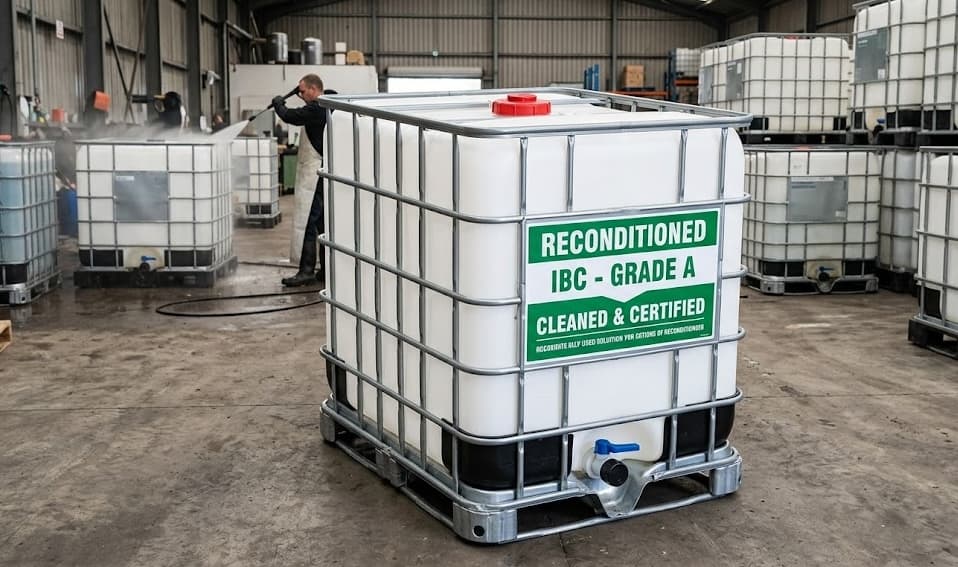
Recycling & Processing
Turning end-of-life IBC totes into valuable raw materials — responsibly, efficiently, and with near-zero waste.
Our Recycling Process
Every tote that enters our facility follows a systematic process designed to maximize material recovery and minimize environmental impact.
Collection & Pickup
We dispatch trucks to your facility and collect totes of any condition — damaged, contaminated, or simply worn out.
Sorting & Assessment
Each tote is evaluated. Reusable units are separated for reconditioning; end-of-life containers move to material recovery.
Disassembly & Processing
Totes are broken down into individual components: HDPE bottles, steel cages, pallets, and valves.
Material Recovery
Plastics are shredded, washed, and pelletized. Steel is baled for smelting. Wood pallets are chipped or refurbished.
Where the Materials Go
Nothing goes to waste. Each component of an IBC tote has a second life.
HDPE Plastic
~120 lbs per toteBottles are granulated into clean regrind, then pelletized into raw HDPE resin used to manufacture new containers, drainage pipe, and plastic lumber.
Steel Cage
~55 lbs per toteTubular steel cages are cut, baled, and sent to steel mills where they are melted and recast into new products — from rebar to auto parts.
Wood Pallet
~35 lbs per totePallets in good shape are refurbished and resold. Damaged wood is chipped for landscaping mulch or biomass fuel.
Environmental Impact
Responsible recycling is not just good ethics — it is measurable. Here is what our operations achieve every year.
What Happens to Each Component
An IBC tote is not a single material -- it is a composite of plastic, steel, wood, and rubber. Each component follows a dedicated recovery stream engineered for maximum yield and minimum contamination.
HDPE Bottle Processing
The inner HDPE bottle is the most valuable component. After removal from the cage, bottles are sorted by color and previous contents. They pass through a granulator that reduces the plastic to 10-12mm flake, which then enters a hot-wash flotation tank to remove adhesive residue, labels, and trace contaminants. The clean flake is dried, passed through a melt filter, and extruded into uniform pellets. These pellets carry a Melt Flow Index (MFI) certification and are sold to manufacturers of new IBC bottles, corrugated drainage pipe, plastic lumber, and agricultural containers.
Average yield per tote is approximately 120 pounds of food-contact-grade or industrial-grade HDPE regrind. Color-sorted white bottles command premium pricing due to their versatility in downstream applications.
Steel Cage Recovery
Tubular steel cages are separated from the bottle and pallet using hydraulic shears. Cages in reusable condition are straightened, repainted, and paired with new bottles for reconditioned tote assembly. End-of-life cages are cut into manageable sections, compressed in a 50-ton baler, and shipped to regional steel mills. The baled steel is melted in electric arc furnaces and recast into new steel products including rebar, structural tube, automotive components, and appliance housings.
Each cage yields roughly 55 pounds of mild steel. Because IBC cage steel is clean, uncoated tubular stock, it commands favorable scrap pricing and requires less energy to recycle than coated or composite steel products.
Wood Pallet Reclamation
Pallets are inspected for structural integrity. Pallets that meet ISPM-15 heat-treatment standards and have no cracked stringers are refurbished -- damaged boards are replaced, nails are re-driven, and the pallet is re-stamped for continued use. Pallets beyond repair are fed through a horizontal grinder, producing clean wood chips sorted into two streams: landscaping mulch and biomass fuel feedstock.
Approximately 60% of pallets we receive are refurbished and returned to circulation. The remaining 40% are chipped, keeping wood fiber out of landfills and putting it to productive use in landscaping, erosion control, and renewable energy generation.
Valves, Gaskets, and Small Parts
Butterfly valves, cap assemblies, and gaskets are removed during disassembly. Valves in working order are cleaned, pressure-tested, and reused on reconditioned totes. Non-functional valves are sorted by material type -- polypropylene bodies go to plastic recycling, stainless steel components join the metals stream, and rubber gaskets are collected for rubber reclamation. Even the smallest components are accounted for in our zero-landfill commitment.
Compliance & Documentation
Recycling IBC totes is not simply about breaking containers apart. It is a regulated activity that demands proper handling, documentation, and reporting -- especially when totes have held hazardous or controlled substances. Our facility operates under all applicable federal, state, and local environmental permits.
Every load that enters our yard is weighed, cataloged, and assigned a tracking number. You receive a Certificate of Recycling that documents the date of processing, weight of materials recovered by category, and final disposition of each material stream. This documentation supports your company's environmental compliance reporting, waste diversion audits, and sustainability disclosures.
For totes that previously contained hazardous materials, we follow RCRA and DOT protocols for residue management, including manifesting, proper neutralization, and disposal through licensed hazardous waste facilities. We maintain Safety Data Sheets for every chemical-bearing tote we process.
Documentation You Receive
- ✓Certificate of Recycling with unique tracking number and date of processing
- ✓Weight breakdown by material type: HDPE, steel, wood, and miscellaneous
- ✓Final disposition report showing where each material stream was sent
- ✓Hazardous waste manifest (when applicable) per RCRA standards
- ✓Annual summary report for companies tracking sustainability KPIs
Industries We Serve
IBC totes are used across dozens of industries, and each one generates end-of-life containers that require responsible processing. We work with companies of all sizes across these sectors and more.
Chemical Manufacturing
Acids, bases, solvents, adhesives, and specialty chemicals. Proper residue handling and neutralization before material recovery.
Food & Beverage
Edible oils, syrups, flavorings, and juice concentrates. Clean processing that meets food-safety residue standards.
Agriculture
Fertilizers, pesticides, herbicides, and crop nutrition products. Compliant handling of EPA-regulated agricultural chemicals.
Automotive & Industrial
Lubricants, coolants, degreasers, and hydraulic fluids. Oil-bearing totes processed through dedicated separation equipment.
Pharmaceuticals & Cosmetics
Active ingredients, excipients, fragrances, and personal care compounds. Documented chain of custody from pickup to final processing.
Water Treatment
Coagulants, pH adjusters, chlorine compounds, and water conditioning chemicals. Safe handling of corrosive and oxidizing residues.
Why Proper Recycling Matters
IBC totes contain industrial plastics and metals that do not belong in landfills. When improperly discarded, chemical residues can leach into soil and groundwater. HDPE plastic takes over 400 years to decompose naturally.
Proper recycling recovers over 98% of materials, reduces greenhouse gas emissions compared to virgin manufacturing, and keeps hazardous residues out of the environment. It also helps businesses meet EPA and state environmental compliance requirements.
By choosing IBC West Coast, you are not just disposing of containers — you are actively contributing to a circular economy.
Schedule a Recycling Pickup
- 1Call us or submit a form with details: approximate quantity, tote condition, and your location.
- 2We provide a pickup date and, if applicable, a buyback quote for reusable units.
- 3Our crew arrives, loads the totes, and provides a recycling certificate for your records.
Our Zero Waste Commitment
Zero waste is not a marketing slogan at IBC West Coast -- it is an operational target that drives every decision we make in our recycling facility. Our goal is to divert 100% of incoming IBC tote material from landfill disposal, and we are currently operating at a 98% material recovery rate. The remaining 2% consists of contaminated residues and non-recyclable adhesive compounds that must be disposed of through licensed waste facilities.
We are actively working to close that final 2% gap through partnerships with specialty recyclers who can process materials that fall outside our core recovery streams. Our target is to reach 99.5% diversion by the end of the year.
Closed-Loop Plastic Recovery
HDPE regrind from our facility goes directly to manufacturers who produce new IBC bottles, corrugated drainage pipe, and plastic lumber. By keeping the material in a closed loop, we reduce the demand for virgin petroleum-based resin and the energy required to produce it. Every ton of recycled HDPE saves approximately 1.8 tons of CO2 emissions compared to virgin manufacturing.
Steel Circular Economy
Steel from IBC cages is one of the most recyclable materials on earth. The baled steel we produce goes to electric arc furnace mills that melt and recast it into new products with minimal quality degradation. Steel can be recycled indefinitely without losing its properties, making IBC cage recovery a genuinely circular process.
Wood Waste Elimination
We refuse to send any wood to landfill. Pallets in reusable condition are refurbished and returned to service. Wood that is beyond repair is chipped and sold to landscaping companies for mulch, to farms for animal bedding, or to biomass energy facilities for renewable fuel. Even sawdust from our grinding operation is collected and sold for composting.
Valve and Hardware Recovery
Small components like butterfly valves, cap assemblies, gaskets, and metal fasteners are sorted by material type and channeled into the appropriate recycling stream. Working valves are cleaned, tested, and reused on reconditioned totes. Non-functional parts are recycled by material -- polypropylene to plastic recyclers, stainless steel to metals recyclers, rubber to rubber reclaimers.
Water Reclamation
Our wash and processing operations generate significant wastewater. Rather than discharging it, we operate a closed-loop water treatment system that filters, settles, pH-adjusts, and recirculates up to 85% of process water. This reduces our freshwater consumption by hundreds of thousands of gallons annually and minimizes discharge to municipal treatment systems.
Residue Management
Chemical residues removed during processing are handled according to their classification. Non-hazardous residues are processed through our wastewater treatment system. Hazardous residues are manifested and transported to licensed treatment, storage, and disposal facilities by certified haulers. We maintain complete chain-of-custody documentation for every residue stream.
Material Recovery Rates by Component
Transparency is a core value of our recycling operation. We track recovery rates by material type and publish them because we believe our customers deserve to know exactly what happens to the containers they send us. These figures represent our rolling 12-month averages based on tens of thousands of totes processed.
Recovery rate means the percentage of incoming material weight that is successfully converted into reusable raw material or refurbished components, as opposed to being sent to landfill or incineration.
| Material | Recovery Rate | Avg. Weight per Tote | Recovery Destination | Loss Factors |
|---|---|---|---|---|
| HDPE Plastic (Bottle) | 99.2% | ~120 lbs | Pelletized regrind for new container manufacturing, pipe production, and plastic lumber | Contaminated surface layers removed during hot-wash process |
| Steel (Cage) | 99.8% | ~55 lbs | Baled scrap to electric arc furnace mills for recasting into rebar, tube, and automotive steel | Negligible -- scale and rust removed during baling |
| Wood (Pallet) | 97.5% | ~35 lbs | 60% refurbished pallets, 40% mulch and biomass fuel chips | Contaminated wood from chemical-bearing totes sent to licensed disposal |
| Polypropylene (Valves) | 96.0% | ~2 lbs | Cleaned and reused (functional) or granulated for plastic recycling (non-functional) | Heavily degraded or chemically compromised units |
| Rubber (Gaskets) | 92.0% | ~0.5 lbs | Rubber reclamation facilities for use in flooring, mats, and playground surfaces | Chemically degraded gaskets not suitable for reclamation |
| Labels and Adhesive | 85.0% | ~0.3 lbs | Paper labels recycled. Adhesive residue captured in wash filtration system. | Non-recyclable adhesive compounds sent to waste-to-energy |
| Overall Composite | 98.0% | ~213 lbs total | Multiple certified recycling and reuse streams | 2% total loss to licensed disposal or waste-to-energy |
End-of-Life Options Comparison
When an IBC tote reaches the end of its useful life, you have three options: recycle it responsibly, send it to a landfill, or attempt to recondition it for one more use cycle. Each option has different cost, environmental, and compliance implications. We help you make the right decision for each individual tote based on its actual condition.
Not every tote should be recycled -- some have more life left in them. And not every tote can be reconditioned -- some are genuinely beyond repair. The comparison below helps you understand the trade-offs.
| Factor | Recycling (IBC West Coast) | Landfill Disposal | Reconditioning for Reuse |
|---|---|---|---|
| Cost to You | Free pickup on 10+ totes. Buyback payment for reusable units. | Dumpster rental + hauling + per-ton disposal fee ($50-$150 per tote) | Cleaning + repair costs ($25-$75 per tote depending on condition) |
| Environmental Impact | 98% material recovery. Near-zero landfill contribution. | 400+ year decomposition for HDPE. Potential chemical leaching into groundwater. | Best option when feasible -- extends tote life by 1-3 additional cycles. |
| Regulatory Compliance | Full documentation: recycling certificate, weight breakdown, disposition report. | May require hazardous waste manifest if residues are present. Risk of non-compliance. | Cleaned to specification with certificate. Compliant for reuse in intended application. |
| Turnaround Time | Pickup within 3 business days. Certificate issued within 5 business days. | Depends on waste hauler schedule. Typically 1-2 weeks. | 1-5 business days depending on cleaning level and repair scope. |
| Documentation Provided | Recycling certificate, weight manifest, material disposition report. | Waste manifest only. No material recovery documentation. | Cleaning certificate, grade assessment, inspection report. |
| Sustainability Reporting | Supports ESG metrics, waste diversion rates, and circular economy claims. | Counts against waste diversion targets. Negative ESG impact. | Supports reuse metrics and container lifecycle extension. |
| Best For | Totes with structural damage, severe contamination, or beyond-repair components. | Not recommended for IBC totes under any circumstances. | Totes with cosmetic wear but sound structure that can serve additional use cycles. |
Our Recommendation
We always assess every tote individually before deciding its path. If a tote has remaining useful life, we recommend reconditioning and reuse -- it is the most environmentally and economically efficient option. When a tote has genuinely reached end of life, recycling through our facility recovers the materials and keeps them in productive circulation. We never recommend landfill disposal for IBC totes because 98% of the materials are recoverable, and the environmental and cost penalties of landfilling are unjustifiable when a recycling option exists.
Recycling Pickup Scheduling
We make it as easy as possible to get end-of-life IBC totes off your property and into our recycling facility. Whether you have a one-time batch of surplus totes or need ongoing scheduled pickups, we handle the logistics so you can focus on your operation.
Free pickup is available on loads of 10 or more totes within our primary West Coast service area. Smaller loads may incur a nominal pickup fee, or you can drop totes off at our Hayward facility at no charge during business hours.
One-Time Pickup
For facility cleanouts, inventory reductions, or disposing of a batch of end-of-life containers, schedule a one-time pickup. Contact us with the approximate quantity, tote condition, and your location. We provide a pickup date within 3 business days for loads within our primary coverage area.
Recurring Scheduled Pickup
For businesses that generate end-of-life totes on an ongoing basis, we set up recurring pickup schedules that run automatically without requiring you to call each time. This is popular with manufacturing plants, chemical distributors, and food processors that cycle through containers regularly.
What to Expect on Pickup Day
Arrival Confirmation
Our driver contacts you 30-60 minutes before arrival. If your facility requires a gate code, dock appointment, or check-in, let us know when scheduling.
On-Site Count and Assessment
The driver performs a quick count and condition spot-check. Reusable totes are noted separately -- you may receive buyback payment for those.
Loading
Our crew loads totes onto the truck using proper stacking and securing techniques. We bring all necessary equipment. Average load time is 15-30 minutes for 20-50 totes.
Paperwork and Departure
You receive a pickup receipt listing quantity, estimated condition breakdown, and tracking number. The recycling certificate follows within 5 business days.
Corporate Sustainability Reporting Support
Environmental, Social, and Governance (ESG) reporting has moved from a nice-to-have to a business necessity. Investors, customers, and regulators increasingly expect companies to quantify and disclose their environmental impact, including waste generation, material diversion, and carbon emissions. IBC tote recycling is a tangible, measurable contribution to your sustainability metrics, and we provide the documentation you need to report it accurately.
Our recycling documentation is designed to plug directly into the most common ESG reporting frameworks, including GRI, CDP, SASB, and TCFD. Whether your sustainability team needs raw data or formatted reports, we provide it.
Documentation We Provide
Per-Load Recycling Certificate
Issued within 5 business days of each pickup. Includes unique tracking number, date of processing, total weight, weight by material type (HDPE, steel, wood), and disposition of each material stream. This is your primary audit trail document.
Quarterly Summary Report
Aggregated data for the quarter showing total totes recycled, total weight diverted from landfill, breakdown by material type, and estimated CO2 emissions avoided. Formatted as a data table suitable for direct inclusion in sustainability reports.
Annual Sustainability Statement
Comprehensive annual document summarizing your company's IBC tote recycling activity. Includes year-over-year comparisons, cumulative impact figures, and a narrative summary suitable for inclusion in annual ESG disclosures. Custom formatting available to match your reporting framework.
Hazardous Waste Documentation
For totes that contained listed hazardous materials, we provide complete manifesting documentation per RCRA requirements, including generator identification, waste codes, and signed manifest copies from licensed receiving facilities.
Metrics You Can Report
Recycling IBC totes with us generates measurable data points that your sustainability team can use in ESG reports, supplier scorecards, and internal performance tracking. Here are the specific metrics our documentation supports:
Estimated Environmental Impact per 100 Totes Recycled
Close the Loop on Your IBC Totes
Join hundreds of West Coast businesses that recycle responsibly with IBC West Coast. Free pickup on loads of 10+ totes.