Why California Businesses Are Switching to Reconditioned IBC Totes
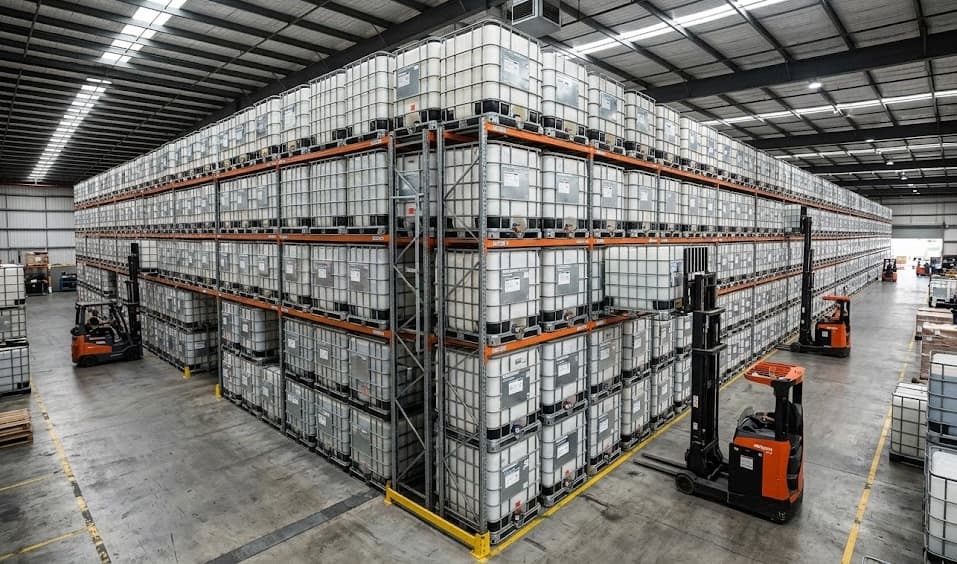
California has long been at the forefront of environmental regulation and sustainability practices. In recent years, the state's business community has embraced reconditioned IBC totes in growing numbers, driven by a combination of regulatory requirements, cost pressures, and genuine commitment to environmental stewardship. This article examines the factors behind this trend and what it means for businesses operating in the state.
The Regulatory Push
California's environmental regulations are among the most stringent in the nation, and several recent regulatory developments have directly or indirectly encouraged the use of reconditioned containers.
CalRecycle, the state's recycling and waste reduction agency, has implemented increasingly aggressive waste diversion targets. The state's goal of 75 percent waste diversion from landfills puts pressure on businesses to find alternatives to single-use packaging. Reconditioned IBC totes directly support this goal by extending container life and reducing the volume of industrial packaging entering the waste stream.
SB 54, the Plastic Pollution Prevention and Packaging Producer Responsibility Act, establishes requirements for reducing plastic packaging waste. While primarily targeting consumer packaging, the legislation signals California's broad commitment to reducing plastic waste across all sectors. Businesses that proactively adopt reconditioning practices position themselves favorably in this regulatory environment.
California's cap-and-trade program and broader climate policies create an economic incentive for reducing carbon emissions. Manufacturing new IBC totes generates significantly more CO2 than reconditioning existing ones. Companies subject to emissions reporting or carbon offset requirements can point to reconditioning practices as a tangible emissions reduction measure.
The Cost Factor
California's high operating costs make every expense matter. Between elevated real estate costs, some of the highest labor costs in the nation, and significant regulatory compliance expenses, California businesses are motivated to find savings wherever possible.
Reconditioned IBC totes offer 40 to 55 percent cost savings compared to new containers, and on the West Coast, a robust secondary market means supply is generally reliable. For a company using hundreds or thousands of IBC totes annually, the switch to reconditioned containers can yield tens of thousands of dollars in annual savings.
The economic math is particularly compelling for California businesses because the state's large and diverse industrial base generates a steady supply of used IBC totes. Agriculture, food processing, chemicals, wine production, and technology manufacturing all contribute containers to the secondary market, keeping supply strong and prices competitive.
The Sustainability Imperative
Beyond regulation and cost, California businesses face growing pressure from customers, investors, employees, and the public to demonstrate genuine sustainability commitment.
Corporate ESG (Environmental, Social, and Governance) reporting has become standard practice for large California companies and is increasingly expected of mid-sized firms. Container reuse and reconditioning are concrete, measurable sustainability metrics that can be reported in ESG disclosures.
Supply chain sustainability requirements from major California corporations cascade to their suppliers. A food manufacturer serving large retailers like Costco or Whole Foods (both with significant California operations) may find that their customer's sustainability standards effectively mandate packaging reuse practices.
Consumer awareness in California is high. Businesses that can demonstrate reduced environmental impact gain competitive advantage, particularly in consumer-facing industries like food and beverage, where the packaging story is part of the brand story.
Employee expectations also play a role. In California's competitive labor market, companies with strong sustainability practices have an advantage in recruiting and retaining talent, particularly among younger workers who prioritize environmental values.
Industry-Specific Adoption
The trend toward reconditioned IBC totes is playing out across several key California industries.
Agriculture and wine production represent the largest volume users. California's Central Valley and Wine Country operations use vast quantities of IBC totes for water, fertilizers, grape juice, wine, and other agricultural products. Many agricultural operations have established closed-loop reconditioning relationships where totes circulate between the farm, the processor, and the reconditioner in a predictable cycle.
Food and beverage manufacturing is the fastest-growing segment for reconditioned totes. Food-grade reconditioning (with new bottles meeting FDA standards in used cages) provides the quality assurance the industry requires at a significant cost reduction.
Chemical and cleaning product manufacturing has a long history of IBC reuse and reconditioning. These industries were early adopters and continue to refine their practices, increasingly specifying reconditioned totes in procurement specifications rather than just accepting them as an alternative.
Cannabis and hemp processing is an emerging sector that has adopted IBC totes for solvent storage, extraction processes, and waste management. As this industry matures and margins tighten, the cost advantage of reconditioned containers becomes increasingly attractive.
The Local Advantage
Geography matters in the IBC tote reconditioning equation. Shipping empty IBC totes long distances for reconditioning undermines both the economic and environmental benefits. California businesses benefit from a dense network of local reconditioning facilities, particularly in the Bay Area, Central Valley, and Southern California.
Companies like IBC West Coast in Hayward provide local reconditioning and recycling services that minimize transport distances. A used tote generated in the Bay Area can be reconditioned and back in service within days, without the cost and carbon impact of cross-country shipping.
This local infrastructure also enables more responsive service. When a California business needs containers quickly, local reconditioners can deliver faster than new container manufacturers, who may have lead times measured in weeks.
Making the Switch
For California businesses considering the transition to reconditioned IBC totes, the process is straightforward.
Assess your current container usage. Identify volumes, specifications, and quality requirements. Determine which applications can use reconditioned containers immediately and which may require phased transition.
Identify local reconditioning partners. Look for facilities with established quality control processes, documented cleaning and inspection procedures, and the ability to provide containers meeting your specific requirements (food-grade, UN-certified, specific valve types, and similar specifications).
Establish a return or exchange program. The circular model works best when used containers flow back to the reconditioner efficiently. Negotiate container pickup or exchange arrangements with your reconditioning partner.
Track and report the results. Document the cost savings, waste reduction, and carbon impact of your reconditioning program. This data supports ESG reporting, marketing claims, and internal justification for continuing and expanding the program.
The shift toward reconditioned IBC totes in California reflects a broader evolution in how businesses think about packaging: not as a disposable input but as a durable asset to be managed for maximum value over its full lifecycle.
Need IBC Totes for Your Operation?
IBC West Coast offers new, used, and reconditioned IBC totes with West Coast delivery. Get a free quote today.
Get a Free Quote