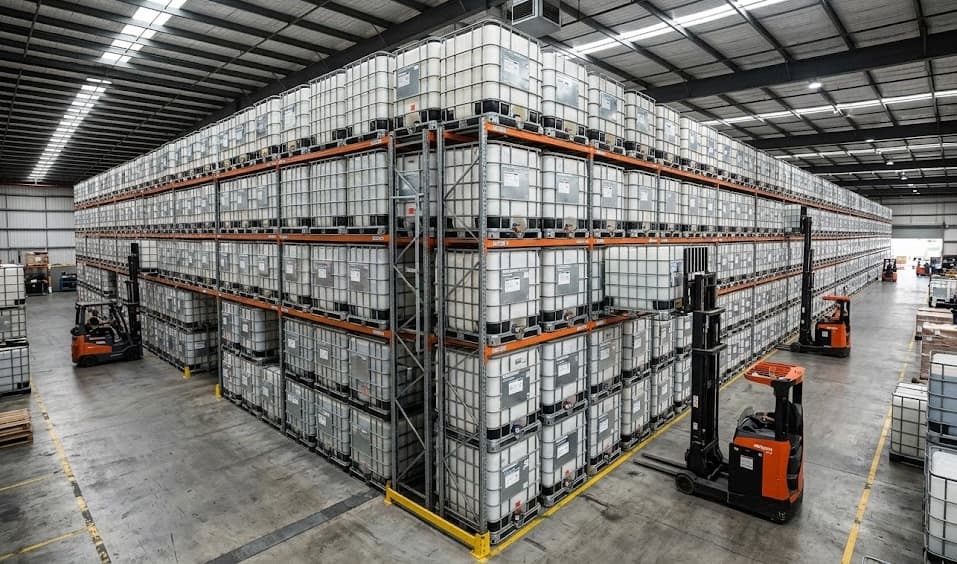
IBC Tote Lifespan: How Long Do They Really Last?
One of the most common questions from IBC tote buyers is straightforward: how long will this container last? The answer, unfortunately, is not a single number. The lifespan of an IBC tote depends on a complex interaction of factors including how it is used, what it contains, where it is stored, and how well it is maintained. This article provides an honest, detailed assessment of IBC tote longevity.
Component Lifespans Vary
A composite IBC tote is not a single item with a single lifespan. It is an assembly of components, each with its own durability characteristics. Understanding these individual lifespans is key to maximizing the overall value of your containers.
The steel cage is the most durable component. A well-manufactured, properly maintained steel cage can last 15 to 20 years or more. The galvanized coating provides excellent corrosion protection in most environments. The primary failure modes for cages are physical damage from impacts, corrosion at weld points where the galvanized coating was compromised during manufacturing, and fatigue from repeated loading and unloading cycles.
The HDPE bottle has a shorter lifespan due to the inherent properties of polyethylene. HDPE degrades over time through several mechanisms: UV radiation breaks molecular chains, chemical exposure can cause swelling or embrittlement, and thermal cycling creates cumulative stress. Under typical industrial use conditions, an HDPE bottle has a practical lifespan of 5 to 8 years.
The valve assembly is a consumable component that typically needs replacement or reconditioning every 2 to 4 years under regular use. Seals and gaskets degrade from chemical exposure and mechanical wear.
The pallet base lifespan varies by material. Steel pallets can last as long as the cage (15 plus years). Wooden pallets typically need replacement or repair every 3 to 7 years, depending on handling conditions and environmental exposure.
Factors That Shorten Lifespan
Several factors can significantly reduce the useful life of an IBC tote below the typical ranges described above.
UV exposure is the single most damaging environmental factor for the HDPE bottle. Ultraviolet radiation from sunlight breaks the polymer chains in polyethylene, causing the material to become brittle, crack, and eventually fail. A tote stored outdoors in direct sunlight in a sunny climate (like much of the West Coast) can experience significant UV degradation in as little as 2 to 3 years. Indoor storage or UV-protective covers dramatically extend bottle life.
Chemical aggressiveness matters enormously. The HDPE bottle is compatible with a wide range of chemicals, but some substances accelerate degradation. Strong oxidizers can attack the polymer. Certain solvents cause swelling that weakens the bottle walls. Even materials that are technically compatible can affect the bottle if stored for extended periods or at elevated temperatures.
Temperature extremes affect both the bottle and the cage. Prolonged exposure to high temperatures (above 140 degrees Fahrenheit) accelerates HDPE degradation and can cause permanent deformation. Extreme cold (below 0 degrees Fahrenheit) makes HDPE brittle and susceptible to impact damage. Repeated thermal cycling -- hot days followed by cold nights -- creates cumulative stress.
Physical abuse shortens the life of every component. Rough handling with forklifts, dropping, dragging, and impact damage all accumulate over time. While a single minor impact may cause no apparent damage, repeated minor impacts fatigue the materials and eventually lead to failure.
Improper cleaning can also cause damage. Using incompatible cleaning chemicals, pressure washing at excessive pressures, or using abrasive cleaning methods can degrade the HDPE surface and compromise wall thickness.
Factors That Extend Lifespan
Just as certain factors shorten lifespan, proactive measures can extend the useful life of your IBC totes well beyond the minimum expectations.
Indoor storage is the single most effective way to extend bottle life. Removing UV exposure and temperature extremes can add years to the bottle's service life. If indoor storage is not possible, UV-protective covers or shaded storage areas provide significant benefit.
Compatible contents keep the bottle in good condition. Storing materials that are well within the HDPE compatibility range, at ambient temperatures, results in minimal chemical degradation.
Proper handling prevents physical damage. Training forklift operators, using appropriate lifting equipment, and establishing handling procedures reduce the cumulative wear on cage, bottle, and pallet.
Regular cleaning between uses prevents chemical buildup and allows inspection of the bottle's interior condition. It is much easier to spot early signs of degradation on a clean surface.
Timely component replacement keeps the overall assembly functional. Replacing a worn valve or degraded gasket before it fails prevents leaks and the associated contamination or damage to other components.
The Reconditioning Cycle
The reconditioning process is central to maximizing IBC tote lifespan. By replacing the HDPE bottle while retaining the long-lasting steel cage and pallet, reconditioning essentially renews the container at a fraction of the cost of a new unit.
A typical IBC tote might go through 3 to 5 bottle changes over its total service life. Each reconditioning adds another 5 to 7 years of useful life for the bottle, while the cage and steel pallet continue to serve. This means the total useful life of an IBC tote system (cage plus successive bottles) can reach 20 years or more.
The economics are compelling. If a new IBC tote costs 300 dollars and reconditioning costs 120 dollars, a tote that is reconditioned four times will cost a total of 780 dollars over a 25-year life, versus 1,500 dollars for five new totes over the same period. The reconditioning approach costs roughly half as much while consuming less raw material and generating less waste.
When to Retire an IBC Tote
Even with the best care, every IBC tote eventually reaches the end of its useful life. Signs that it is time to retire a tote include visible cracks or crazing in the HDPE bottle, significant wall thinning (below minimum thickness standards), cage structural failure that cannot be economically repaired, pallet damage that compromises safe handling, or inability to pass a pressure or leak test.
At end of life, IBC totes should be recycled rather than sent to landfill. The HDPE bottle can be ground into pellets for reuse in manufacturing. The steel cage and pallet components are recyclable as scrap metal. Even the wooden pallet can be chipped for mulch or biomass.
Maximizing Your Investment
The key takeaway is that IBC tote lifespan is not fixed but is heavily influenced by your choices. Invest in quality containers from reputable manufacturers, store them properly, handle them carefully, clean them thoroughly, replace wear components proactively, and utilize reconditioning to extend the system's total service life. These practices can easily double or triple the value you extract from each IBC tote dollar spent.
Understanding the true lifecycle of your IBC totes transforms them from a disposable expense into a managed asset with predictable, optimizable economics.
Need IBC Totes for Your Operation?
IBC West Coast offers new, used, and reconditioned IBC totes with West Coast delivery. Get a free quote today.
Get a Free Quote