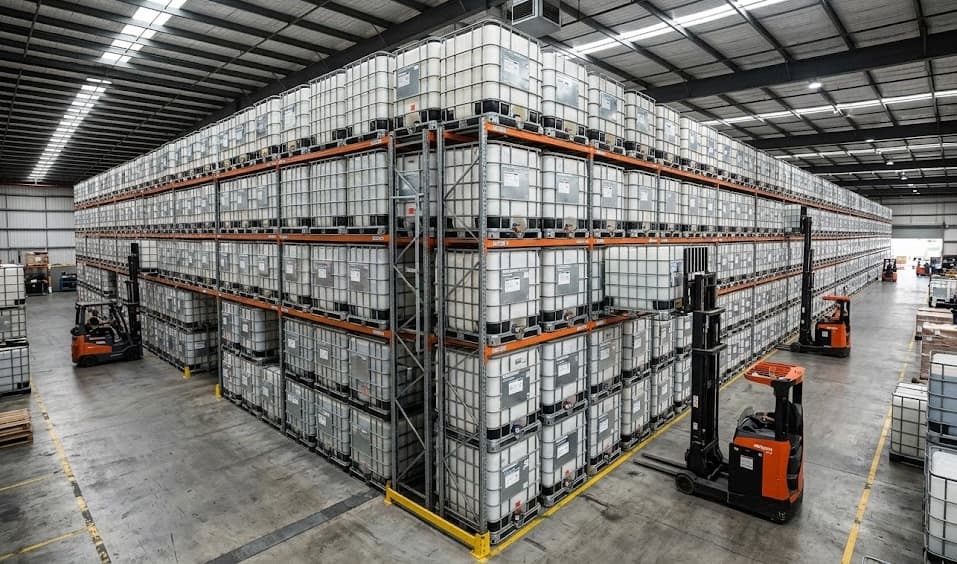
Food-Grade IBC Totes: What You Need to Know Before Buying
Food-grade IBC totes are a specialized category of intermediate bulk containers designed and certified for storing and transporting materials intended for human consumption. Whether you are a food manufacturer, beverage producer, or agricultural processor, understanding the requirements and considerations for food-grade IBC totes is essential for maintaining product safety, regulatory compliance, and customer trust.
What Makes an IBC Tote "Food Grade"
The term "food grade" refers to a container that meets specific standards for materials, manufacturing, and cleanliness that make it suitable for contact with food products. For IBC totes, this involves several criteria.
The HDPE resin used in the bottle must be FDA-compliant under 21 CFR 177.1520, which specifies the types of polyethylene permitted for food-contact applications. Food-grade HDPE is produced under stricter quality controls than industrial-grade material, with limits on residual catalysts, additives, and potential contaminants.
The valve, gasket, and cap materials must also be food-safe. Seals are typically made from EPDM or silicone rubber that meets FDA 21 CFR 177.2600 requirements. Metal components that contact the product must be made from food-grade stainless steel or other approved materials.
The manufacturing facility must follow Good Manufacturing Practices (GMP) relevant to food-contact packaging. This includes clean production environments, documented quality control procedures, and traceability of raw materials.
The finished container must be free from contamination at the time of sale. New food-grade IBC totes are typically supplied in sealed packaging or with protective covers to prevent contamination during storage and transit.
FDA Regulations and Compliance
The US Food and Drug Administration regulates materials that come into contact with food under the Federal Food, Drug, and Cosmetic Act. For IBC totes, the key regulatory provisions include the following.
The container material must be an approved food-contact substance. HDPE is approved under 21 CFR 177.1520, but the specific formulation (including any colorants, UV stabilizers, or other additives) must also comply. White or natural (translucent) HDPE is standard for food-grade totes; colored bottles may require additional compliance documentation.
Manufacturers must be able to provide a Certificate of Compliance or Letter of Guarantee confirming that their containers meet FDA requirements. This documentation should be part of your supplier qualification process.
The Food Safety Modernization Act (FSMA) has added additional requirements for food packaging, including preventive controls, supply chain management, and sanitary transportation rules. If you are a food manufacturer, your use of IBC totes falls under your facility's FSMA compliance program.
New vs Used Food-Grade Totes
This is one of the most important decisions in food-grade IBC tote procurement. Both options are viable, but each comes with distinct considerations.
New food-grade IBC totes provide the highest assurance of cleanliness and compliance. They arrive in pristine condition, with full documentation of materials and manufacturing. For the most sensitive applications -- products consumed directly without further processing -- new totes are the safest choice.
Used food-grade IBC totes can be an excellent value if properly sourced and verified. The key qualification for a used food-grade tote is that it must have previously held only food-grade materials. A tote that has held industrial chemicals at any point in its history is permanently disqualified from food-grade service, regardless of how thoroughly it is cleaned.
Reputable dealers of used food-grade IBC totes maintain detailed records of previous contents and provide this information to buyers. They also perform thorough cleaning and inspection before resale. If a dealer cannot tell you what was previously stored in a used food-grade tote, do not purchase it for food applications.
Reconditioned food-grade totes (with a new bottle installed in a used cage) offer a middle ground. The new HDPE bottle provides a clean, uncontaminated product-contact surface, while the reused cage keeps costs lower than a completely new unit. Many food processors find this to be the optimal balance of cost and quality.
Cleaning Protocols
Proper cleaning of food-grade IBC totes is critical for maintaining food safety. The cleaning process typically follows a multi-step protocol.
Pre-rinse removes the majority of residual product from the previous fill. This step uses warm water and typically recovers product that can be returned to the production process, reducing waste.
Alkaline wash uses a food-safe detergent solution (typically a caustic or alkaline cleaner at 2 to 5 percent concentration) at elevated temperature (140 to 180 degrees Fahrenheit) to remove organic residues, fats, and proteins. The solution is circulated through the tote for 15 to 30 minutes.
Acid rinse uses a food-safe acid solution (typically phosphoric or citric acid at 1 to 2 percent concentration) to neutralize alkaline residues and remove mineral deposits. This step is particularly important in hard water areas.
Sanitization uses a food-safe sanitizer (such as chlorine dioxide, peracetic acid, or quaternary ammonium compounds) to eliminate microbial contamination. The sanitizer concentration and contact time must meet FDA guidelines for the specific product being used.
Final rinse with potable water removes all chemical residues. This step is critical for preventing any cleaning chemical from contaminating the food product.
Drying and inspection complete the process. The tote is drained thoroughly and allowed to dry, then inspected for any remaining contamination, off-odors, or physical damage before being approved for reuse.
Common Food-Grade Applications
IBC totes are widely used throughout the food and beverage industry for a variety of products.
Liquid food products including fruit juice concentrates, vegetable oils, syrups, liquid sweeteners, vinegar, wine, beer, and liquid dairy products are commonly stored and transported in food-grade IBC totes.
Agricultural products such as honey, maple syrup, molasses, and liquid animal feed are well-suited to IBC tote handling.
Food ingredients including flavoring agents, colorants, preservative solutions, and brine are frequently shipped in IBC totes.
Potable water for use in food manufacturing processes is another common application, particularly in facilities that receive municipal water in bulk for specific processing needs.
Best Practices for Food-Grade IBC Tote Management
Establish a dedicated fleet of food-grade totes and never mix them with industrial containers. Color-coding or dedicated marking systems can help prevent cross-contamination.
Implement a first-in, first-out rotation system to ensure totes are used within their optimal service life.
Store empty food-grade totes in a clean, covered area. Exposure to dust, pests, or weather can compromise cleanliness.
Train personnel on proper handling procedures. Seemingly small actions -- like leaving a tote cap off during storage -- can introduce contamination.
Maintain detailed records of what each tote has held, when it was cleaned, and the results of any inspections. This traceability is a core requirement of modern food safety management systems.
Conduct periodic microbiological testing of cleaned totes to verify your cleaning protocol is effective.
Food-grade IBC totes represent a significant investment in product safety. Understanding the standards, choosing the right containers, and implementing proper management practices protects both your products and your customers.
Need IBC Totes for Your Operation?
IBC West Coast offers new, used, and reconditioned IBC totes with West Coast delivery. Get a free quote today.
Get a Free Quote